Special thanks to Jennie Goldstein, Support Center Community of Practice member, for helping to shape this reflection.
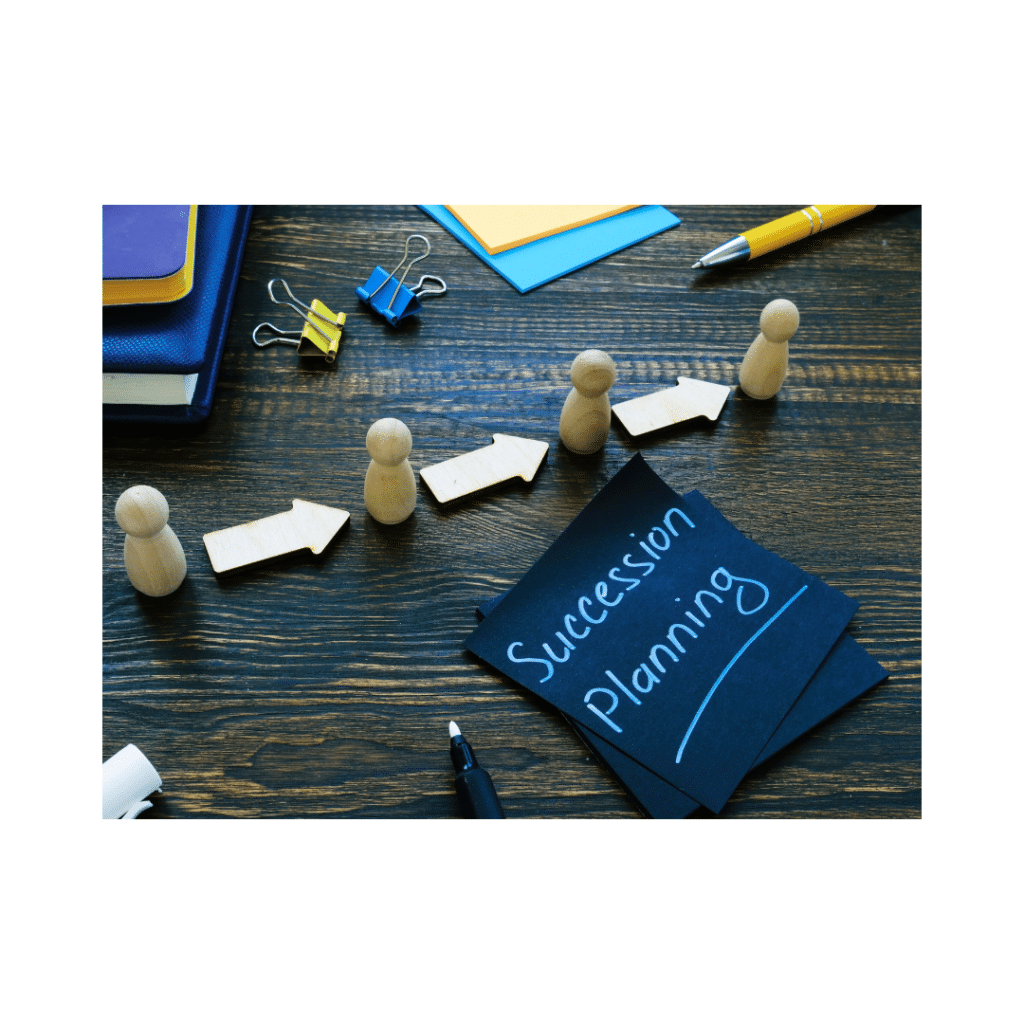
You may think succession planning is about preparing for the future–a hypothetical future at that. In fact, succession planning is about the present. Building resilience through succession planning is a way to give your team confidence for the future so that they can stay focused on the present. Uncertainty robs us of creative thinking and concentration, and we are living in a time that is, by design, full of uncertainty. Our responsibility in the nonprofit sector is to resist the siren song of uncertainty and build confidence in the future so we can continue our work now. If you’re already operating without enough resources, it may be hard to imagine finding capacity for succession planning. However, you can work succession planning and futureproofing into your normal activities. You may even find that they create more capacity than they absorb.
Competencies and Career Paths
A good first step is to establish competencies and career paths. If you don’t have one already, a competencies framework (here’s an example) spells out what is required for your organization to function. This framework helps you begin to understand where those competencies exist in your organization (including beyond your current talent configuration) and what competencies you may need to reinforce through hiring or training. Importantly, a competencies framework also shows your team how to grow. Finally, it reveals opportunities to cross-train staff members to build resilience across roles and expand your team’s skill sets. The added bonus here is that employee engagement is often boosted by providing new opportunities to learn and grow professionally. As you explore competencies and career paths, be careful to avoid overwhelming your team with additional responsibilities if they are already overloaded. Small, “snackable” cross-training opportunities are much easier to fit into your schedule.
Knowledge Management
An obvious opportunity for resilience is knowledge management. There’s too much on this topic to summarize here, but process mapping is essential. Documenting how you currently do your most essential work not only creates a record that can be used in the future in case of emergencies or for onboarding, it also gives you the opportunity to simplify the way you work. Resilience is not just about strengthening the way you do the work now; it’s also about finding more reliable and trustworthy ways to do the work. Mermaidchart.com (AI-powered diagramming) is a great tool to simplify process mapping.
Technology Spending
Technology spending can be a significant share of the budget and the Return on Investment (ROI) can vary widely. Expensive can still be a good deal. For HR Information Systems, payroll and compliance providers, and databases (e.g., Customer Relationship Management (CRM) software), there is a natural tension between paying for more robust capabilities (and the support to leverage them) and overspending on features or integrations that won’t make much difference.
Consider if you are making payments to create technology resilience in your organization (i.e. paying an IT help desk on retainer) and if you are satisfied with that service. If you made the decision to outsource that support more than two years ago, consider whether your needs have evolved and if you want to bring more of that spending in-house.
And how much time is your team spending on data entry and how trustworthy is the data output? Would you have the data you needed in a crunch? How long would it take to assemble? A good proxy for this is thinking about preparing for quarterly board meetings and how long it takes to pull materials together. Now imagine what you would do to prepare for a board meeting in half the time with half the team. What would change?
Communication
Over-communicate and then communicate some more. When you model openness, transparency, and a degree of vulnerability, you encourage the same qualities in your team. This increases your chances of hearing early warnings on potential points of failure as well as innovations and opportunities to change and grow. This is one of the most cost-effective ways to futureproof your organization.
Redundancy
In safety-critical industries, we talk about a “belt and suspenders” that provides more than one way to achieve the necessary outcome so that even if one system breaks (for example, a belt) your pants still stay up! What would “belt and suspenders” look like for your organization’s outcomes? If you provide a service or platform, how else can you meet the same need? Importantly, ask what would be better than your current system, not worse. Belt and suspenders doesn’t mean the approach you use today or a downgraded, backup version. It can mean what you do today and then a simpler, stronger, more elegant approach.
Traditionally, resilience is organized into prevention and response: preventing bad outcomes plus optimizing what would happen if the worst came to pass. Preventing bad outcomes is the primary mission of many organizations who are working to protect US nonprofits and the people they serve. Response, however, belongs to all of us. When we work on optimizing for an uncertain future, we strengthen our resilience and sense of power in the present.